



 Svenska
Yellow
The colour of yellow flowers comes from carotenoids, which are easy for plants to produce and easily visible to bees and butterflies. In plant dyeing, the petals of many yellow-flowered plants naturally produce yellow shades, but many other shades can also be obtained by using
different parts of the plant.

Plant Species and Dyes

Mexican grain amaranth, Amaranthus paniculatus ’Green Thumb’
There is no information on the use of Mexican grain amaranth in plant dyeing, but its close relative Amaranthus retrofluxus, produces shades of yellow and grey.

Dahlia, Dahlia x pinnata ’Justice’
Dahlia flowers come in various shades of yellow and brown.

Euphorbia graminea
There is no information on the use of Euphorbia graminea in dyeing, but it was used to replace the poisonous leafy spurge (Euphorbia esula), which produces shades of yellow and brown.

Common marigold, Calendula officinalis ’Snow Princess’
Boiling the flowers of the common marigold produces shades of yellow and yellow-orange. The leaves produce shades of yellow and cream using alum mordanting (a method to make the color
adhere better).

Snapdragon, Antirrhinum majus Snapshot ’Yellow’
Snapdragon produces shades of green and gold, but the species is not particularly significant in plant dyeing.

Parsley, Petroselinum latifolium
Parsley yields shades of yellow and yellow-green. Fresh leaves and stems yield shades of cream using alum mordanting (a method to make the color adhere better).

China aster, Callistephus chinensis ’The Blues’
Greenish-yellow shades can be obtained from Chinese aster flowers using chrome mordanting (a method to make the color adhere better and to alter the hue).

Bergamot, Monarda fistulosa
This plant has not been used in plant dyeing, but fit aesthetically into this planting scheme.

Black-eyed Susan, Thunbergia alata ’Sunny Susy Dark Eye’
Black-eyed Susan is not a dye plant, but some kind of climbing plant was also needed for the planting sites. Unfortunately, no climbing plant with dyeing properties and in the required quantity could be found.

Om du har frågor kontakta:
E-post:
Telefon:
Senast ändrad:
Ändrad av:

Nyheter
-
.webp) Publicerad
Publicerad
Borås kraftsamlar för Världens Barn
Den 26 september arrangeras en kväll för Världens Barn på Textile Fashion Center i Borås. Besökare kan ta del av musik, aktiviteter och insamlingar, samtidigt s...
-
 Publicerad
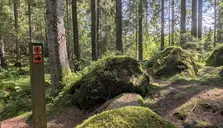
Välkommen på nyinvigning av Sjuhäradsleden
På Vandringens dag lördag 12 september nyinvigs Sjuhäradsleden. I Rya åsar kan du få tips om friluftsliv och naturupplevelser, lära dig tända eld med tändstål o...
-
 Publicerad
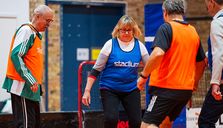
Ny omgång av Senior Sport School startar i september
Är du 60 år eller äldre och nyfiken på hur du kan få en mer aktiv, social och hälsosam vardag? Då skulle Senior Sport School kunna vara något för dig!

Kalender
-

Storbildsvisning av fotbolls-VM: Japan – Sverige
Tid: kl.
Plats: Stora torget, Borås
-

Invigning av Borås blomsterprogram 2026
Tid: kl.
Plats: Folktalaren vid Stadshuset
-

Storbildsvisning av fotbolls-VM: Frankrike - Sverige
Tid: kl.
Plats: Stora torget, Borås